Overtaking
What is overtaking?

Remember that we only speak of overtaking when the other vehicle is moving.
If a vehicle in front of you is travelling more slowly than the maximum permitted speed, you may overtake it. As a general rule, you do this on the left, although you will see later that there are some exceptions.
If a vehicle is stationary or parked on the carriageway and you drive past it, this is not considered overtaking, but passing.
What is not considered overtaking?
Information sign

If you see these information signs and have chosen a lane that matches your destination, this is no longer considered overtaking.
A driver to your right may therefore travel faster than you without this being a problem.

The same applies if you see these information signs and have chosen a lane that matches your destination: this is no longer considered overtaking.
In a built-up area

If there is more than one lane in your direction of travel and you are driving in a built-up area, you may choose the lane that best suits your destination. In that case, this is also not considered overtaking.
Traffic jam or heavy traffic

In a traffic jam or heavy traffic, passing other vehicles is also not considered overtaking.

In a traffic jam or heavy traffic, motorcycles may ride between the lanes. This is also not considered overtaking.
On motorways and expressways with more than two lanes, they may do so only between the two leftmost lanes.
They must also not exceed 50 km/h and may travel no more than 20 km/h faster than the rest of the traffic.
Overtaking may be prohibited by road markings
White road markings

If there is a broken white line, you may overtake.

If there is a broken white line on your side, next to a solid white line, you may also overtake.

But be careful: if the solid white line is on your side, you may not overtake.

If there is only a solid white line, you may not overtake.
Yellow road markings

Yellow road markings are used during roadworks and are temporary markings. When they are present, the white markings at that location no longer apply.
So if you see a solid yellow line, you may not overtake.

Even if there is a broken white line on your side, next to a solid yellow line, you may not overtake.
The white road marking no longer applies.
Overtaking may be prohibited by road signs

Beyond this prohibition sign, you may not overtake animals in harness, a two-wheeled motor vehicle or a vehicle with more than two wheels on the left. You may therefore overtake a two-wheeled motorcycle, but that motorcycle may not overtake you.
The overtaking ban applies up to and including the next junction, or until you see the second road sign.

This similar prohibition sign has the same meaning, but it only applies to a lorry or vehicle combination with a MAW of more than 3500 kg.
You may therefore still overtake a lorry with your car.
Overtaking may be prohibited by traffic rules
Level crossings


At an unprotected level crossing, you may not overtake animals in harness, a two-wheeled motor vehicle or a vehicle with more than two wheels.
You may overtake if the level crossing is protected by traffic lights or barriers.
Junctions where priority to the right applies

At junctions where priority to the right applies, you may not overtake animals in harness, a two-wheeled motor vehicle or a vehicle with more than two wheels.
These are junctions where there are no signs regulating priority, or where the sign shown here is present.
Junctions where you must give way

At junctions where you must give way, you may not overtake animals in harness, a two-wheeled motor vehicle or a vehicle with more than two wheels.
Near the top of a hill

Near the top of a hill, you may not overtake animals in harness, a two-wheeled motor vehicle or a vehicle with more than two wheels.
You may overtake if you can do so without driving on the part of the carriageway used by oncoming traffic, for example when there are two lanes in your direction of travel.
A steep hill may be indicated by this warning sign, but the overtaking ban still applies even if the sign is not present.
On bends


On bends with limited visibility, you may not overtake animals in harness, a two-wheeled motor vehicle or a vehicle with more than two wheels.
You may overtake if you can do so without driving on the part of the carriageway used by oncoming traffic, for example when there are two lanes in your direction of travel.
Overtaking a vehicle that is already overtaking

You may not overtake animals in harness, a two-wheeled motor vehicle or a vehicle with more than two wheels if it is already overtaking another vehicle.
You may overtake if that vehicle is overtaking a bicycle, a two-wheeled moped or a two-wheeled motorcycle. You may also overtake if there are at least three lanes in your direction of travel, for example on a motorway.
Pedestrian and cyclist crossings


You may not overtake animals in harness, a two-wheeled motor vehicle or a vehicle with more than two wheels when it is approaching a pedestrian or cyclist crossing and stops there.
This prohibition also applies even if you cannot see any pedestrians or cyclists yourself.
Elevated sections


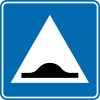
On elevated sections, you may not overtake animals in harness, a two-wheeled motor vehicle or a vehicle with more than two wheels.
The traffic rules above apply whenever you overtake on the left animals in harness, for example pulling a covered wagon, a two-wheeled motor vehicle, such as a moped, or a vehicle with more than two wheels, such as a car.
A bicycle is therefore not covered by these rules and may still be overtaken, provided that it is safe to do so and you do not break any other rules, such as the required lateral distance.
How should you overtake?
Check that you can overtake safely

If there are no road signs or traffic rules prohibiting overtaking, make sure that no one else is overtaking you.

Make sure that the road ahead is clear for a sufficient distance and that any oncoming traffic is still far enough away.

Make sure that you can move back to the right without obstructing other road users. For example, is there a long line of cars ahead of you?
Use your indicators

Once you have checked that it is safe to overtake, you may begin.
Turn on your left indicator and move into the left-hand lane. Once you are in that lane, turn your indicator off again.

Once you have passed the other vehicle, turn on your right indicator and move back into the right-hand lane. Once you are in that lane, turn your indicator off again.
Remember the lateral distance
In a built-up area

When overtaking a cyclist, rider of a two-wheeled moped or pedestrian in a built-up area, you must keep a lateral distance of at least 1 metre.
This also applies to pedestrians walking on the carriageway. If you cannot keep that distance, you may only drive at walking pace.

Even when the cyclist is riding on a (narrow) cycle path, you must keep a lateral distance of at least 1 metre in a built-up area.
Outside a built-up area

When overtaking a cyclist, rider of a two-wheeled moped or pedestrian outside a built-up area, you must keep a lateral distance of at least 1,5 metres.
This also applies to pedestrians walking on the carriageway. If you cannot keep that distance, you may only drive at walking pace.

Even when the cyclist is riding on a (narrow) cycle path, you must keep a lateral distance of at least 1,5 metres outside a built-up area.
May you overtake several vehicles at once?
On an ordinary carriageway

After overtaking, you should return to the right-hand lane as soon as possible. If you cannot do so because the vehicles ahead are driving close together, you may overtake several of them at once.
On two-way carriageways with at least four lanes

If there are several lanes in your direction of travel, you do not have to return to the right-hand lane immediately.
For example, if you overtake the vehicle in front and there is another car a short distance ahead, you may remain in the left-hand lane for a little longer.
On one-way carriageways

On one-way carriageways, you do not have to return to the right immediately.
For example, if you overtake the vehicle in front and there is another car a short distance ahead, you may remain in the left-hand lane for a little longer.
May you also overtake on the right?
Rail vehicles

You may overtake a rail vehicle, such as a tram, on the right.

If you cannot pass on the right because the space is too narrow or blocked, you may overtake the tram on the left.
The vehicle in front is turning left

If the vehicle in front has indicated left and has already moved over to the left, you may overtake it on the right if it is safe to do so.
Make sure that you do not commit any offences while doing so, such as driving on the cycle path or pavement.
You may, however, drive over a verge that is level with the carriageway, but always keep a sufficient lateral distance.
How fast may you drive in a pedestrian zone?

If you are allowed to drive in a pedestrian zone, you must do so at walking pace. You must leave enough space for pedestrians and stop if necessary. You must not obstruct or endanger them.
If cyclists are allowed, they must also get off and walk if the area is too crowded.

Prohibition sign C35
From this sign up to and including the next junction, overtaking animals in harness or vehicles with more than two wheels on the left is prohibited.
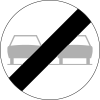
Prohibition sign C37
End of the prohibition imposed by road sign C35.

Prohibition sign C39
From this sign up to and including the next junction, drivers of vehicles or combinations used to carry goods with a MAW of more than 3,5 tonnes may not overtake animals in harness or vehicles with more than two wheels on the left.

Prohibition sign C41
End of the prohibition imposed by road sign C39.
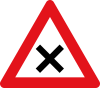
Priority sign B17
Priority from the right applies at the next junction.

Priority sign B1
Give way.

Priority sign B5
Stop and give way.

Warning sign A3
Steep hill downwards.

Warning sign A5
Steep hill upwards.

Warning sign A1a
Dangerous bend to the left.
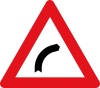
Warning sign A1b
Dangerous bend to the right.
Ready to practise?
You’ve completed this section. Test your knowledge with 106 practice questions.
Start practice questions