Your car: technical basics
Driver assistance systems
Cruise control

Cruise control helps you maintain a constant speed without having to keep your foot on the accelerator.
It is especially useful on long, straight roads with steady traffic flow, such as motorways. Avoid using cruise control in poor weather conditions, such as rain, snow or icy conditions.
A more advanced version is adaptive cruise control. It automatically maintains a safe distance from the vehicle ahead and slows down or speeds up when necessary, helping to improve safety.
Blind spot warning
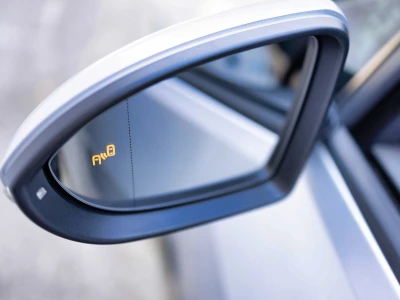
Even with correctly adjusted mirrors, there is still a small area that you can only see by briefly turning your head. This is your blind spot. On larger vehicles, such as lorries, the blind spot is even bigger.
A blind spot warning system uses sensors and alerts you when someone is driving alongside you on the left or right.
Remember that this is only a driver aid. Always check over your shoulder as well before changing direction or position.
Lane assist
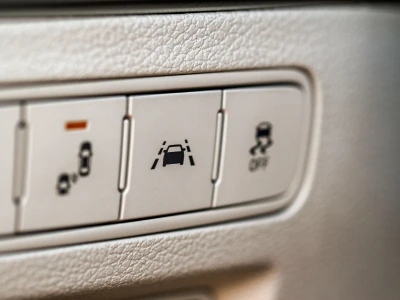
Lane assist helps you stay within your lane. Using cameras, the system detects the road markings and warns you if you begin to drift out of your lane.
The tyres
Tread depth

Your tyres are your car’s only contact with the road, which makes them one of the most important parts to keep in good condition.
The legal minimum tread depth is 1,6 mm, but anything below 2 mm is already considered too little.
Most tyres have tread wear indicators built into the grooves. Once these indicators are level with the tread, the tyres need to be replaced.
Old tyres
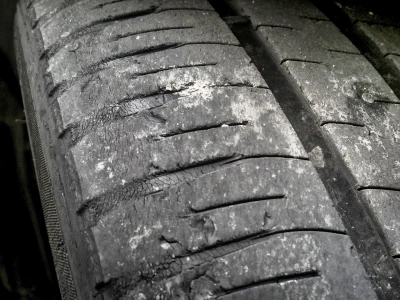
Tyres can also become unsafe simply because of their age, for example if you drive very few kilometres. As the rubber hardens, the tyres provide less grip and your braking distance increases. There is also a greater risk of a puncture or, worse, a blowout.
Regrooving worn tyres is prohibited.
Tyre markings

Your tyre markings provide a lot of useful information. Take 225/45 R 17 91 H as an example:
- 225; the tyre width in millimetres
- 45; the height of the sidewall as a percentage of the tyre height
- R; radial tyre. Older tyres may also have a D, indicating a diagonal-ply tyre
- 17; the wheel rim diameter in inches
- 91; the load index, indicating the maximum weight the tyre can carry
- H; the speed rating, indicating the maximum speed the tyre is designed for. This rating must be lower than your car’s top speed.

Your tyre also has a DOT code. In this example: CP7R DDCR 3525.
The final four digits, 3525, tell you when the tyre was made. This tyre was manufactured in week 35 of 2025.
You need to know how this information is structured.
Tyre pressure

Even a tyre in perfect condition, with no damage or punctures, loses around 0,1 to 0,2 bar of pressure per month on average. That is about 3 to 5% of the recommended pressure. You should therefore check your tyre pressure at least once a month. This helps you drive more safely, use less fuel and make your tyres last longer.
It is best to check the pressure when the tyres are cold: before you set off, or at least two hours after driving.
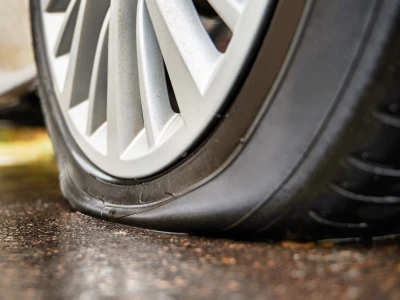
Tyre pressure that is too low increases fuel consumption and tyre wear, while tyre pressure that is too high reduces grip and driving comfort and causes the centre of the tyre to wear more quickly.
For a long journey with a heavy load, increase the tyre pressure to the higher value recommended by the manufacturer. You can find this on a sticker on the door pillar or inside the fuel filler flap. Never inflate the tyres beyond this value, as this reduces grip and causes faster tyre wear.
Special tyres and chains
Winter tyres
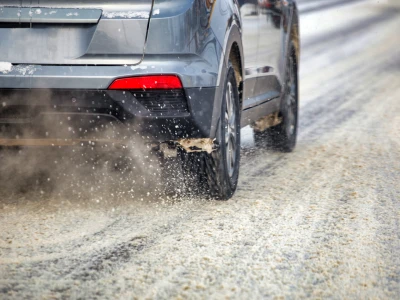
Winter tyres are specially designed with a softer rubber compound and deeper tread, giving you better grip in cold weather, on snow and on wet roads.
When the average temperature drops below 7 °C, it is best to use winter tyres. They should, of course, be fitted to all four wheels.
Studded tyres

Studded tyres are winter tyres with small metal studs embedded in the tread. These provide extra grip on ice and compacted snow.
They may only be fitted from 1 November to 31 March inclusive, and only on vehicles with a MAW of up to 3,5 tonnes.
On ordinary roads, the maximum speed is 60 km/h. On motorways and other roads with at least two lanes in each direction, the maximum speed is 90 km/h.
Snow chains

Snow chains are metal chains fitted around the driven wheels to provide extra grip on snowy or icy roads.
They may only be used when there is snow or ice on the road.
Changing tyres
Tyre rotation

To help your tyres wear evenly, it is best to move them to different positions regularly. This is known as tyre rotation. As a general rule, this should be done every 15 000 km or about every six months.
The correct rotation pattern depends on the type of tyre. If your tyres are not directional, rotate them diagonally: for example, the front-right tyre moves to the rear-left position.
If your tyres are directional, move them only from front to rear: for example, the front-right tyre moves to the rear-right position.
If you also switch between summer and winter tyres, you can combine this with a tyre rotation. That way, both can be done at the same time.
Tightening the wheel bolts
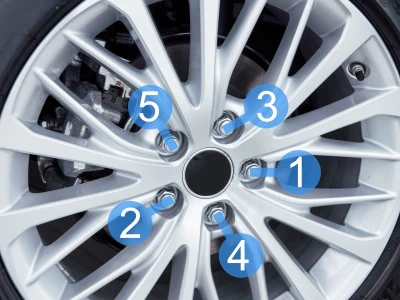
After changing a tyre or fitting the spare wheel, always tighten the wheel bolts in a criss-cross pattern. Start with any bolt, then continue clockwise, skipping one bolt each time, as shown in this example.
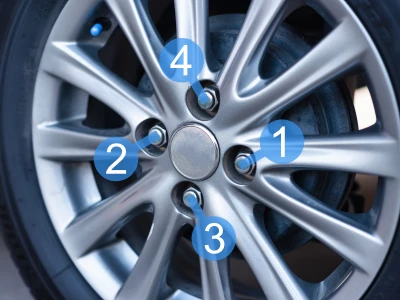
The same method applies if your car has wheels with 4 bolts instead of 5.
The brakes
How do brakes work?
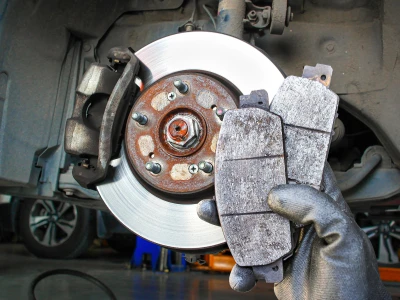
Just like your tyres, brakes that are in good working order are essential for your safety. When you press the brake pedal, the brake pads are pressed against the brake discs, slowing the car down or bringing it to a stop.
Have your brakes checked regularly.
When should you brake?

You brake to slow down or stop, but it is best to avoid braking while you are actually in a bend. Brake before entering the bend so that your car remains stable and you keep better control.
When you brake, the car’s weight shifts forwards. This gives the front tyres more grip, but the rear tyres less grip. If you then brake while cornering, the tyres have to deal with braking and turning at the same time, increasing the risk of skidding or oversteer.
Safety systems
ABS - Anti-lock Braking System
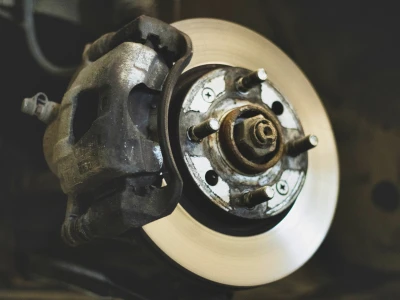
Modern cars are equipped with ABS. This system prevents the wheels from locking during heavy braking, for example in an emergency or on a slippery road.
Because the wheels keep turning, you can still steer while braking. ABS therefore helps you maintain control of the car and, in most situations, also reduces the braking distance.
When ABS is active, you may feel the brake pedal vibrating. This is completely normal. During an emergency stop, keep the brake pedal pressed firmly down.
On loose surfaces such as sand, snow or gravel, ABS can increase the braking distance. In most situations, however, ABS helps reduce the braking distance.
ESP - Electronic Stability Program

ESP also helps improve safety. The system helps keep your car stable if it starts to skid, for example when taking a sharp bend or making a sudden steering movement to avoid something.
If the system detects that the car is not moving in the direction you intend, it tries to correct this by braking individual wheels. You will usually barely notice it working.
ASR - Anti-Slip Regulation

ASR, also known as TCS, prevents your car’s driven wheels from spinning when you accelerate. The system usually works together with ESP to help maintain the stability of the vehicle.
In summary:
- ABS: prevents the wheels from locking when braking
- ESP: helps keep the car stable if it starts to skid
- ASR/TCS: prevents the driven wheels from spinning when accelerating
If a warning light stays on while you are driving, have the car checked at a garage as soon as possible.
Under the bonnet
Battery
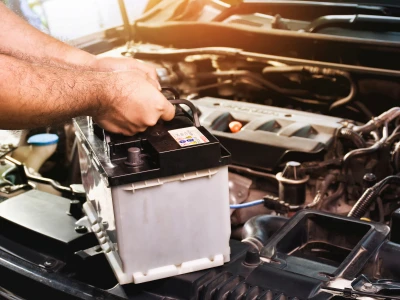
Your car’s battery provides the power needed to start the engine by briefly supplying electricity to the starter motor. It also provides electrical power for the lights, radio and other electrical systems.
The life of the battery depends largely on how you use your car. If you make lots of short journeys and therefore start the engine more often, the battery will wear out sooner. On average, a car battery lasts around 5 years.
Weather conditions also have an effect. Both hot and cold temperatures put extra strain on the battery, and battery failures are most common in winter.
Alternator

Your car’s battery also needs to be recharged, and that is the job of the alternator. Once the engine is running, the alternator generates electricity and recharges the battery.
Engine oil

Your engine needs oil to work properly. The main purpose of engine oil is to lubricate the moving parts, allowing them to move smoothly without rubbing directly against each other.
Without enough oil, friction increases, which can cause the engine to overheat and become seriously damaged.
You should therefore check the oil level regularly using the dipstick, with the engine cold and the car parked on level ground. The dipstick has minimum and maximum marks: the oil level should always be between them.
Coolant

Your engine produces heat as it burns fuel. Coolant carries this heat away, preventing the engine from overheating and helping it stay at the correct operating temperature.
Brake fluid

Brake fluid transfers the force you apply to the brake pedal through the braking system, allowing the brakes to slow the vehicle.
Windscreen washer fluid

Windscreen washer fluid helps keep your windscreen clean while driving. Together with the windscreen wipers, it removes dirt and insects so that you can see clearly.
Antifreeze is added to prevent the fluid from freezing in winter.
Air filter

The air filter prevents dust and dirt from entering the engine. This helps protect the engine and allows it to burn fuel more efficiently, resulting in better performance and, above all, lower fuel consumption.
Ready to practise?
You’ve completed this section. Test your knowledge with 49 practice questions.
Start practice questions- PreviousLoad
- NextEnvironment